Thomas Townsend Brown: The Forgotten Father of Anti-Gravity
The inventor who discovered a link between electricity and gravity — then watched the world forget him.
A Boy Who Wanted to Fly Without Rockets
Thomas Townsend Brown was born on March 18, 1905, in Zanesville, Ohio, into a wealthy construction family. From early childhood, he was obsessed with electricity and space travel. While other kids played, young Tom was building wireless telegraph sets and running electrical experiments in his parents' garage.
Growing up just two years after the Wright brothers' first flight — and in neighboring Dayton, Ohio — Brown dreamed not of airplanes, but of something far more ambitious: a way to travel through space without the brute force of rockets.
By age 15, he had already begun systematic experiments with high-voltage electrical devices. His parents, recognizing their son's unusual talent, bought him professional laboratory equipment and eventually set up a fully provisioned private lab in the family home.

The Discovery That Changed Everything (1921)
In 1921, while still in high school, Brown made the observation that would define his entire life.
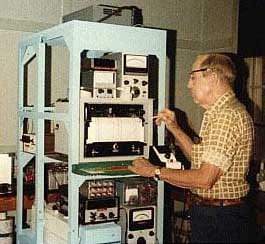
He was experimenting with a Coolidge X-ray tube — a vacuum tube with two asymmetrical electrodes. When he placed the tube on a sensitive balance scale and applied high voltage (around 45 kilovolts), something strange happened:
- When the positive electrode pointed up, the tube got lighter
- When the positive electrode pointed down, the tube got heavier
The weight difference was small but consistent and repeatable. Brown ruled out X-rays as the cause and traced the effect to the high voltage applied to the tube's asymmetric electrodes.
He was convinced he had discovered a connection between electricity and gravity.
Caltech Rejection and Denison University
In 1923, Brown enrolled at the California Institute of Technology. Bursting with excitement about his discovery, he invited professors — including Nobel laureate Robert Millikan — to his home laboratory to see the effect for themselves.
Millikan's response was devastating: the effect was "impossible," and Brown should finish his education before making such claims. The other professors showed little interest.
Frustrated by Caltech's rigidity, Brown left after just one year. He enrolled at Denison University in Granville, Ohio, where he found a crucial ally: physics professor Paul Alfred Biefeld.
Biefeld became Brown's mentor, and together they refined the capacitor experiments. Brown delivered a lecture to the university's Engineering Society titled "Particles of Energy and Gravitation," complete with live demonstrations of his charged devices moving without any visible propulsion.
The phenomenon was named the Biefeld-Brown effect — a name Brown chose to honor his mentor and lend academic credibility to the discovery.
The Gravitator
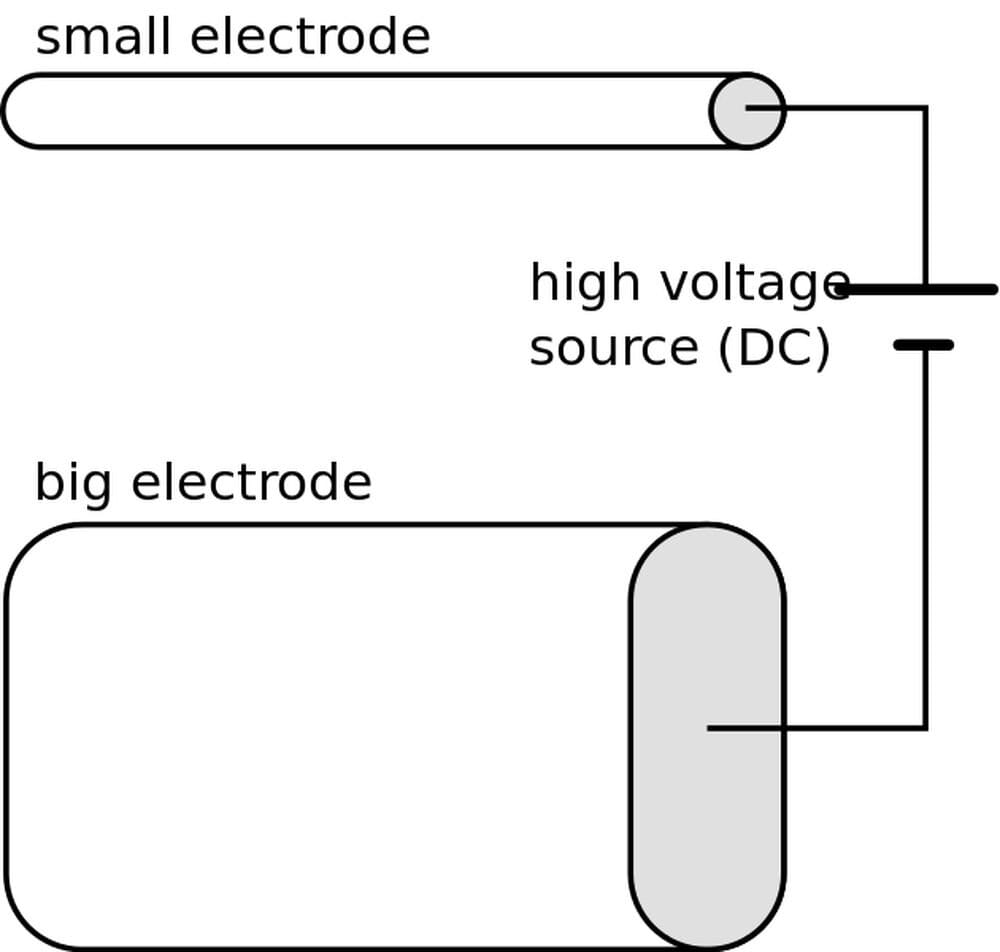
Working in his home lab, Brown developed his first practical device: the gravitator. It consisted of a block of insulating (dielectric) material with electrodes at either end — essentially an asymmetric capacitor.
In Gerry Vassilatos' account from Lost Science:
"His invention had the appearance of a simple bakelite box, but when placed on a scale and connected to a 100-kilovolt power source, the device would gain or lose approximately one percent of its weight, depending on polarity."
Brown received his first patent — British Patent No. 300,311 — in November 1928. In demonstrations, he would mount the gravitator as a pendulum and apply electrical power, causing it to swing consistently in one direction.
In 1929, he published "How I Control Gravitation" in Science and Invention magazine, describing the pendulum method and proposing that the effect could be scaled up. He envisioned "multi-impulse gravitators weighing hundreds of tons" propelling ocean liners or even "fantastic space cars" to Mars.
No established scientist took him seriously.
Navy Service and Military Connections (1930-1942)
Unable to find academic support, Brown enlisted in the U.S. Navy in 1930. His background in experimental electrical research got him assigned to the Naval Research Laboratory in Washington, D.C.
During his Navy years, Brown:
- Participated in the Navy-Princeton gravity expedition to the West Indies aboard submarine USS S-48 (1932)
- Worked on the Johnson-Smithsonian Deep Sea Expedition to the Puerto Rico Trench (1933)
- Proposed a Navy study on "mechanical reaction on fluids" related to his capacitor thrust effects
- Conducted research on magnetic and acoustic mine-sweeping under the Bureau of Ships
- Worked as a material engineer on Navy flying boats at Glenn L. Martin Company
- Served at the Atlantic Fleet Radar School in Norfolk, Virginia
Brown's Navy career ended abruptly in October 1942, under circumstances that remain mysterious. He requested to resign "for the good of the naval service to escape trial by General Court Martial," with his discharge examination listing "no comment" as to the reasons.
After leaving the Navy, Brown worked as a radar consultant for the Lockheed-Vega Aircraft Corporation — the year that Skunkworks was formed.

The Flying Discs
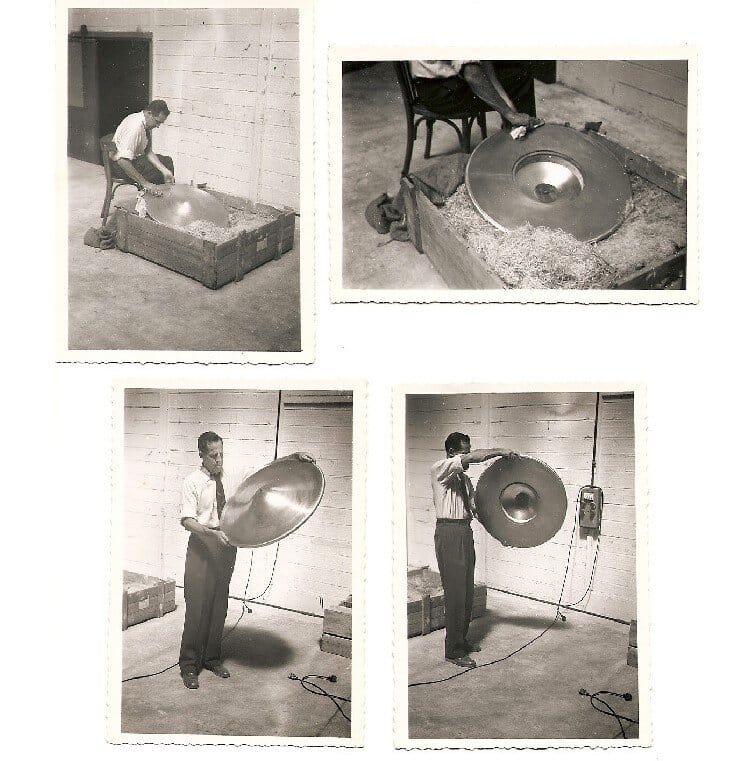
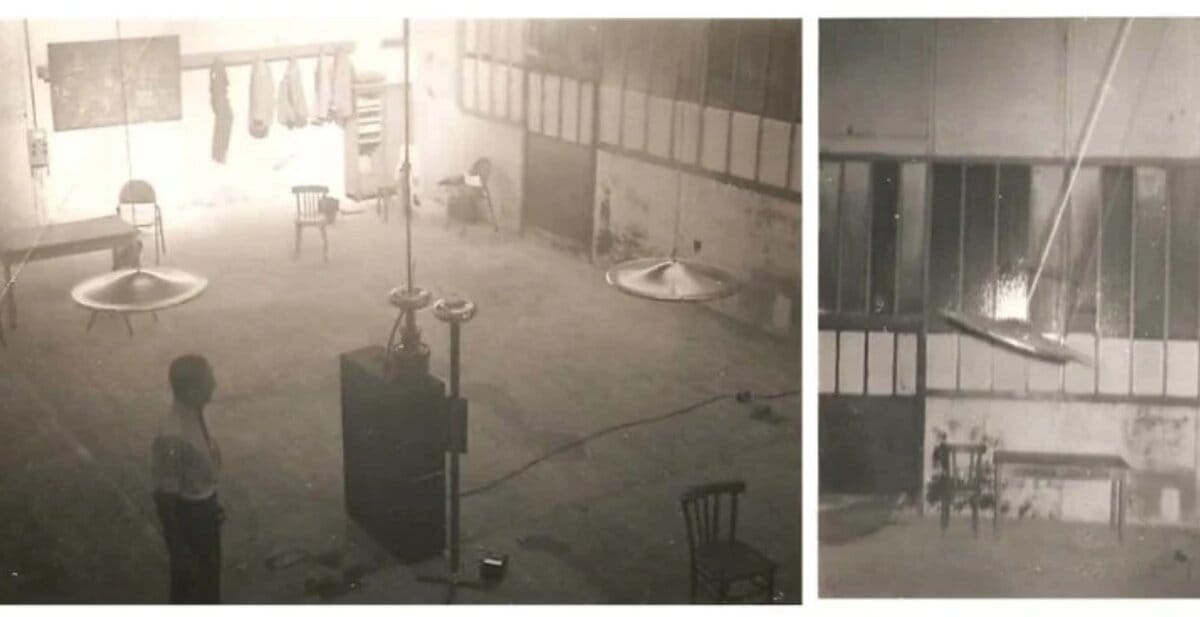
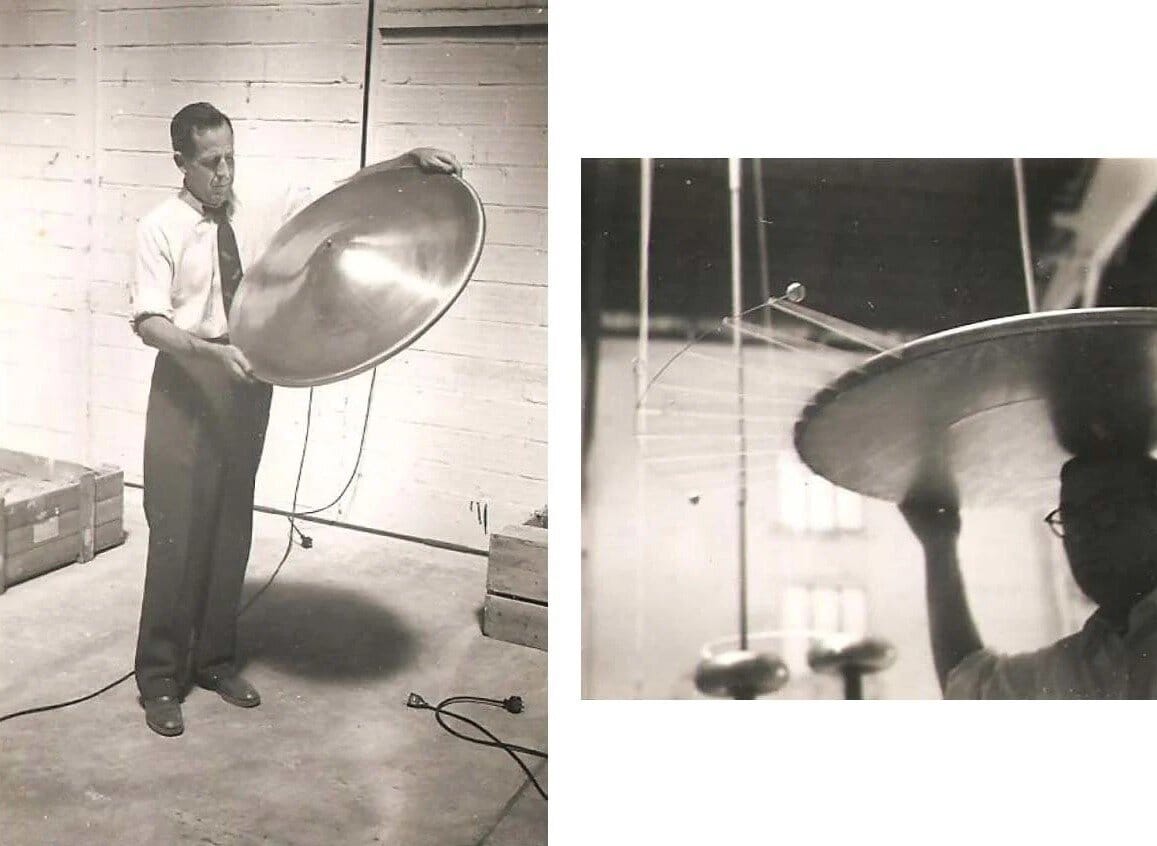
After World War II, Brown refined his invention dramatically. He moved from simple gravitator boxes to disc-shaped devices — metal plates charged with 25,000 to 200,000 volts that produced directional thrust.
According to Russian researcher accounts, Brown built experimental discs of various sizes:
- 3-foot diameter discs: When charged to 50kV, their rotation speed was so impressive that the military took notice
- 24-foot diameter disc: Reportedly reached speeds of 17 feet per second in his laboratory
- The discs required only 50 watts of power to maintain flight — equivalent to a small light bulb
The discs emitted a soft humming sound and were surrounded by a luminous glow during operation.
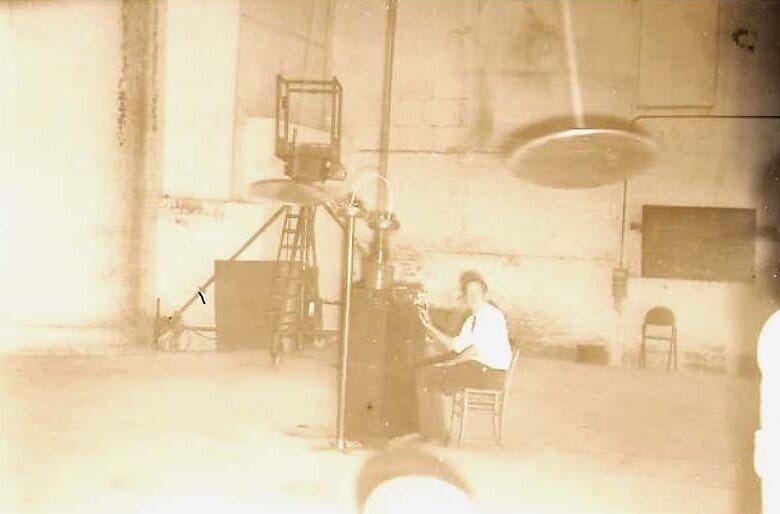
Brown demonstrated these devices to audiences of scientists and military officials in the United States, England, and France. Many witnessed the flights, but few could explain the mechanism — and fewer still were willing to stake their reputations on it.

High-Level Connections
Brown's work attracted attention from some of the most powerful figures of the era:
- Curtis LeMay — Air Force Chief of Staff
- Edward Teller — father of the hydrogen bomb
- Bill Lear — founder of the Learjet
- Agnew Bahnson — founder of the Institute of Field Physics at University of North Carolina
- Admiral Arthur Radford — Commander in Chief of the U.S. Pacific Fleet, who arranged for Brown to demonstrate his Gravitor devices at Pearl Harbor
A lieutenant colonel from Wright Airfield named Victor Bertrandias, who later became a general, witnessed Brown's gravitator experiments in Los Angeles in 1952. He was quoted as saying:
"Believe it or not, I think I just saw a flying saucer, and it frightened me."
NICAP and the UFO Connection
In 1956, Brown co-founded the National Investigations Committee On Aerial Phenomena (NICAP) — the first major civilian organization dedicated to investigating UFO sightings. NICAP attracted scientists, military officers, and other credentialed observers.
Brown was forced out as director in 1957 amid allegations he was using NICAP funds to further his anti-gravity research. The CIA eventually infiltrated the organization with its own officers.
After the CIA's involvement, Brown's public research was reduced to his famous "lifter" experiment — a simple demonstration that anyone could build. What he worked on behind closed doors after that remains unknown to this day.
The Last Years
Brown spent his final decades in semi-retirement in California, continuing to monitor what he called "sidereal radiation" from space. He died on October 27, 1985, on Avalon, Catalina Island, California.
His laboratory was dismantled. Most of his equipment was sold.
Brown held multiple U.S. patents for electrokinetic devices, but with his death, virtually all research based on the Biefeld-Brown effect was abandoned — at least publicly.
The Question That Remains
Was Thomas Townsend Brown a misunderstood genius who discovered a real connection between electricity and gravity? Or was he a persistent inventor whose observations can be fully explained by conventional ion wind effects?
The mainstream physics community chose door number two. But as we'll see in the next article, the story doesn't end there — and the experiments that Brown started nearly a century ago are now being replicated with modern instruments by NASA's own lead electrostatic scientist.
Sources:
- Wikipedia: Thomas Townsend Brown
- Grokipedia: Thomas Townsend Brown
- Gerry Vassilatos, Lost Science, Chapter 7: "Electrogravitic Engines: Thomas Townsend Brown"
- Paul Schatzkin, Defying Gravity: The Parallel Universe of T. Townsend Brown
- Konvenat.ru: Biography of Thomas Townsend Brown (Russian)
- V.N. Vlasov, "Condensator Starship" (Trinitas.ru)
- UAPedia: Thomas Townsend Brown
- The Guardian, "TT Brown's Electrogravitics" (2003)
Next: The Biefeld-Brown Effect: Science or Suppression?